
2026-10-06 · David Miller
How Winter Freezes Affect Drains in Englewood Homes
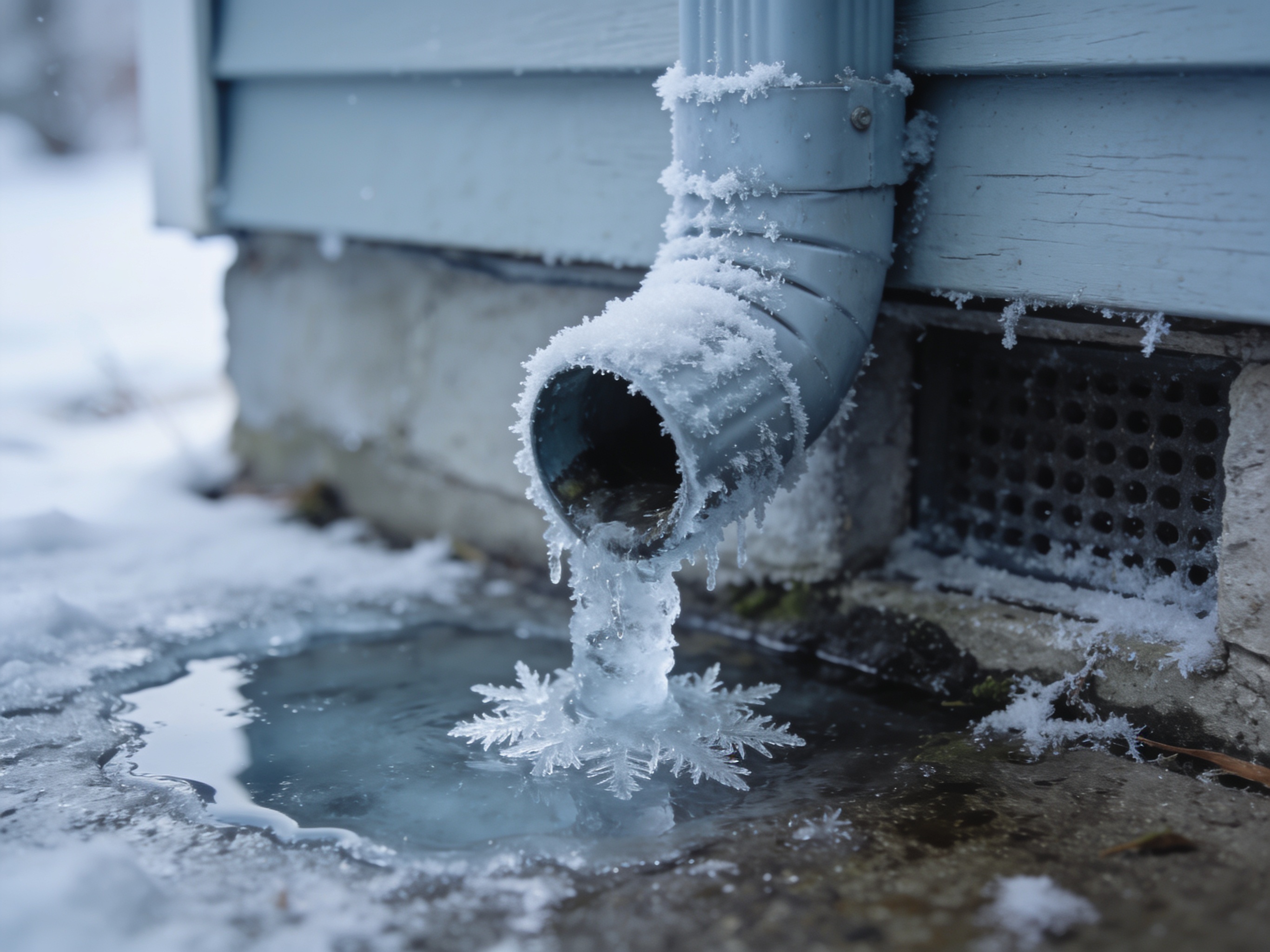
Cold snaps affect drains in three ways: water sitting in a drain line or trap in an unheated space can freeze and block it; grease in kitchen lines hardens faster in cold pipes; and outdoor drains such as downspout lines and area drains can freeze shut, so snowmelt has nowhere to go. Drain lines are usually empty between uses, so they freeze less often than water supply pipes, but lines in crawlspaces, garages, exterior walls and shallow outdoor runs are at risk during long stretches below freezing.
Why freezing damages pipes
Water expands as it freezes. In a supply pipe that is full and under pressure, that expansion can split the pipe. Drain lines are open to the air, so they are less likely to burst, but a trap or a sagging section that holds water can freeze solid and crack, especially older cast-iron or brittle plastic in an unheated space. A cracked drain then leaks every time the fixture is used.
Common winter drain problems
- Slow kitchen drains: grease congeals faster in cold pipe and builds up on the walls.
- Frozen outdoor drains: downspout lines and yard drains freeze, then overflow onto the foundation during the next thaw.
- Fixtures in cold rooms: sinks or floor drains in garages, unheated basements or additions can freeze at the trap.
- Frozen roof vent: in severe cold, frost can partly close a vent opening, causing gurgling until it thaws.
Signs a drain line has frozen
- A fixture that drained normally yesterday won't drain at all during a cold snap, while others in heated rooms are fine.
- Frost or ice visible on an exposed drain pipe.
- Water backing up from an outdoor drain or downspout extension.
- Gurgling in fixtures with no other symptoms, which may be a frosted vent.
If drains throughout the house are slow, a frozen line is less likely than a clog in the main sewer line.
Preventing winter drain freezes
- Insulate drain and supply pipes in crawlspaces, garages and exterior walls.
- Seal gaps where cold air reaches pipes near the foundation.
- Open sink cabinets on exterior walls during cold snaps.
- Keep the heat on if you are away.
- Disconnect garden hoses and make sure downspout extensions slope away from the house so water doesn't sit and freeze in them.
- Keep grease out of the kitchen drain; cold weather makes grease clogs much more likely.
Thawing a frozen drain safely
Warm the pipe gradually with a hair dryer on low, a heating pad or towels soaked in hot water. Never use an open flame or a torch: it is a fire hazard and can crack the pipe. Don't pour boiling water into plastic drain lines. If you can't find the frozen section, or water leaks once it thaws, the pipe may have cracked and needs repair.
When to call
Call if a drain stays blocked after warming, if a thawed line leaks, or if an outdoor drain refreezes repeatedly. If several fixtures are slow and the basement floor drain gurgles, the issue is likely a main line clog rather than ice; our guide to telling a main line clog from a single drain helps sort it out. Describe which drains are affected when you call (720) 735-8696.